Planning a small apartment interior design in Dhaka (900 to 1,200 sft) is often harder than designing a sprawling duplex home interior in Gulshan. In a luxury space, you design for aesthetics; in a compact flat, you design for survival.

You do not have the luxury of making wrong choices. A sofa that is two inches too deep can block your hallway. A wardrobe placed on the wrong wall can cut off your air circulation.

This guide outlines the specific space-saving strategies, standard clearances, and small flat interior design ideas required to transform a compact Dhaka residence into a breathable, functional home.


Designing Smart: The Reality of Compact Living in Dhaka

Before we talk about aesthetics, we must address the “invisible” challenges of small apartment living in Dhaka. Whether you are in a compact unit in Bashundhara or a shared apartment in Mohammadpur, specific constraints define your space:

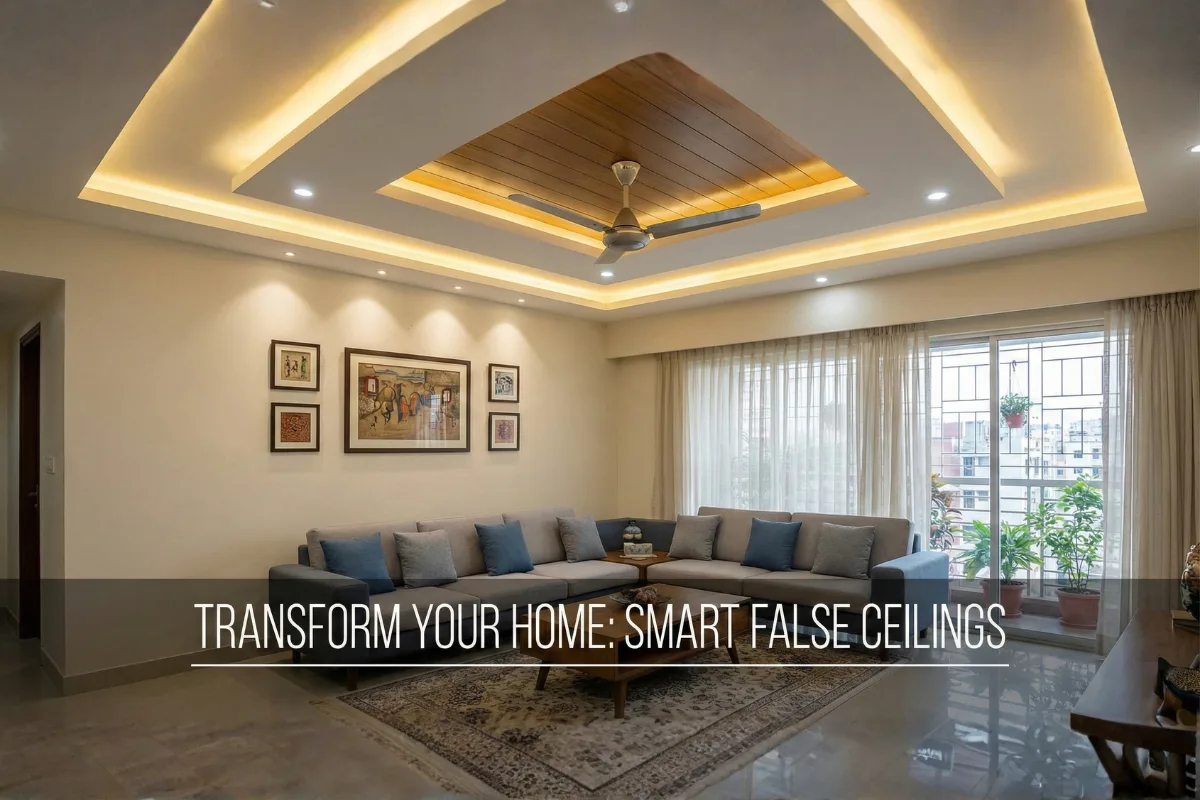
  • Fixed Structural Beams: Unlike western open-plans, Dhaka flats often have deep beams (18–24 inches) that dictate your false ceiling height. Pro Tip: Never lower the entire ceiling; use “peripheral coves” to keep the center height intact.
  • High Humidity & Salinity: Ground-floor and top-floor flats face dampness issues. Standard “Partex” boards will swell within 2 years. You need Marine Plywood or HPL.
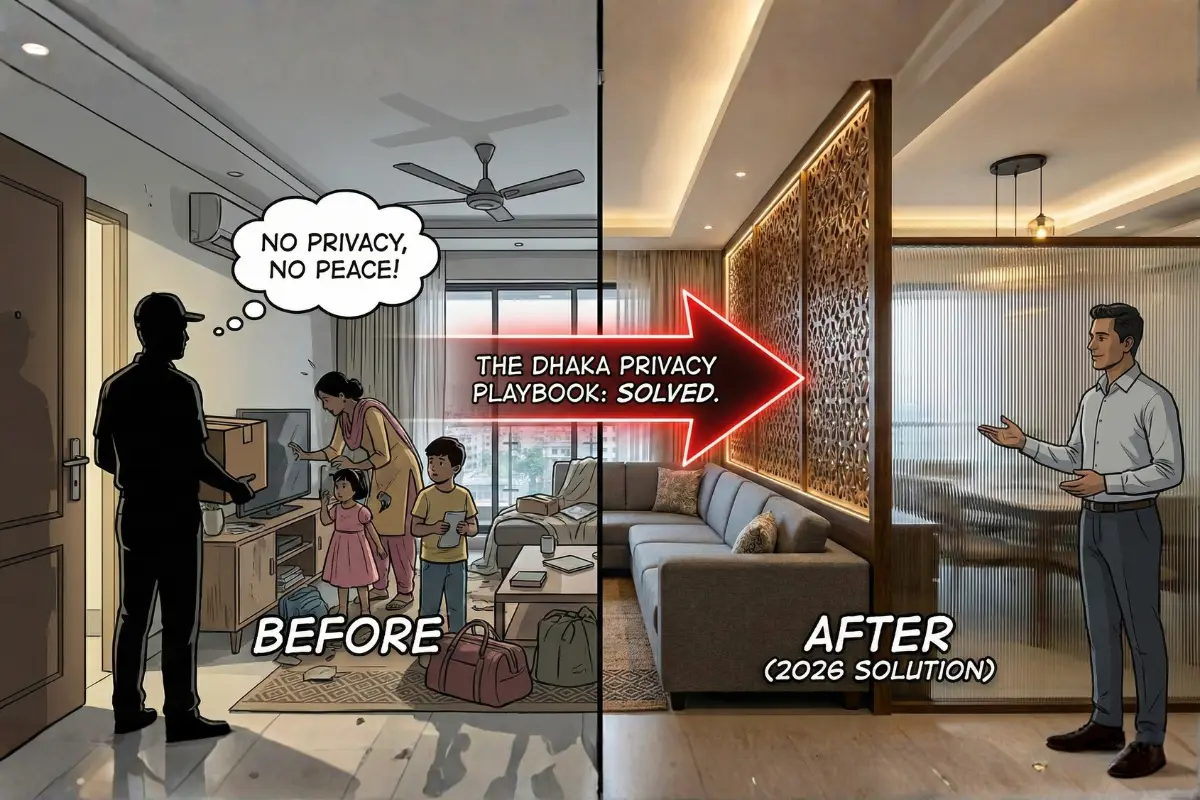
  • The “Combined” Layout: In 90% of small flat layouts, the living and dining areas are combined. You need “Visual Dividers” (like open shelves or glass partitions), not solid walls.


What 900–1,200 Sft Really Looks Like (The Math)

To design effectively, you need to know exactly how much carpet area you are working with. After accounting for walls, shafts, and balconies, a “1,200 sft” apartment usually offers about 850–950 sft of usable floor space.
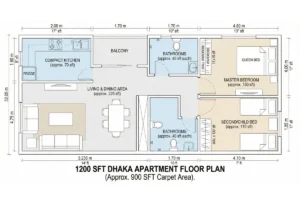
2D floor plan drawing of a typical 1000 sq ft three-bedroom apartment in Dhaka with room dimensions labeled.

Here is the realistic breakdown of room sizes for middle-class apartments in Dhaka:

Zone

Realistic Size (Dhaka Context)

Functional Requirement

Living & Dining

200 – 250 sft Must handle a 3-seater sofa + dining for 6.

Master Bedroom

120 – 140 sft Fits a Queen Bed (5’x7’) + Wall-to-Wall Wardrobe.

Second/Child Bed

100 – 115 sft

Best suited for single beds or bunk beds to save floor space.

Compact Kitchen 60 – 75 sft

Vertical storage is mandatory here.

Small Bathrooms 35 – 45 sft

Tight zones requiring smart wet/dry separation.


Living & Dining Layouts: Managing Traffic Flow

The biggest mistake homeowners make in small flats is buying showroom furniture without measuring “depth.” A standard showroom sofa has a depth of 36 inches. In a 10-foot wide room, this eats up your walking space.
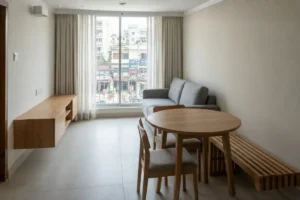
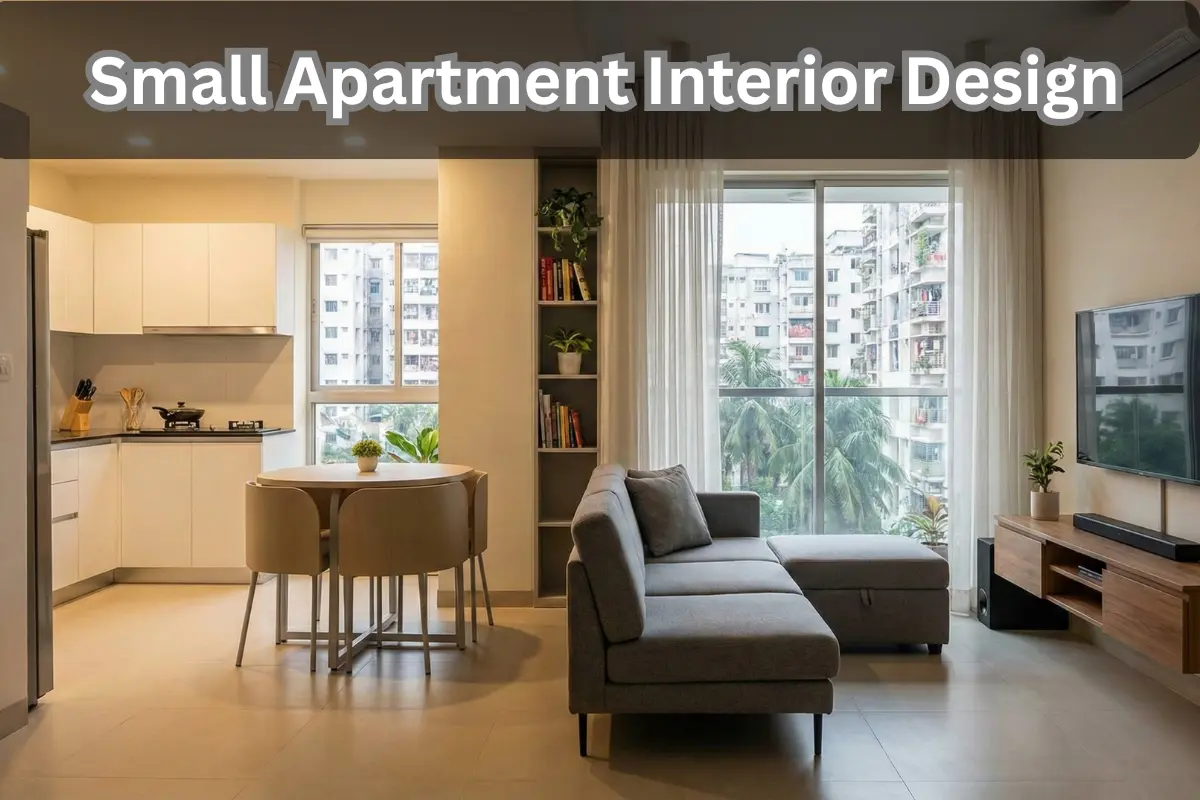
Small living room interior with a slim-depth sofa and a wall-mounted floating TV cabinet to maximize floor space.

The Pro Playbook for Compact Living Rooms:

  • Slim-Line Furniture: Custom-order sofas with a depth of 30 to 32 inches. This saves you 4–6 inches of critical walkway space. This is why choosing custom furniture vs. ready-made options is critical for saving walkway space.
  • Floating TV Units: Avoid floor-standing consoles. Use wall-mounted units with a depth of 14–16 inches. Visible floor area makes a small room look larger.
  • The Dining Clearance: You need at least 36 inches of clearance around your dining table. If space is tight, use a bench on one side – it tucks completely under the table when not in use.


Bedroom Interiors: Wardrobes & Nooks

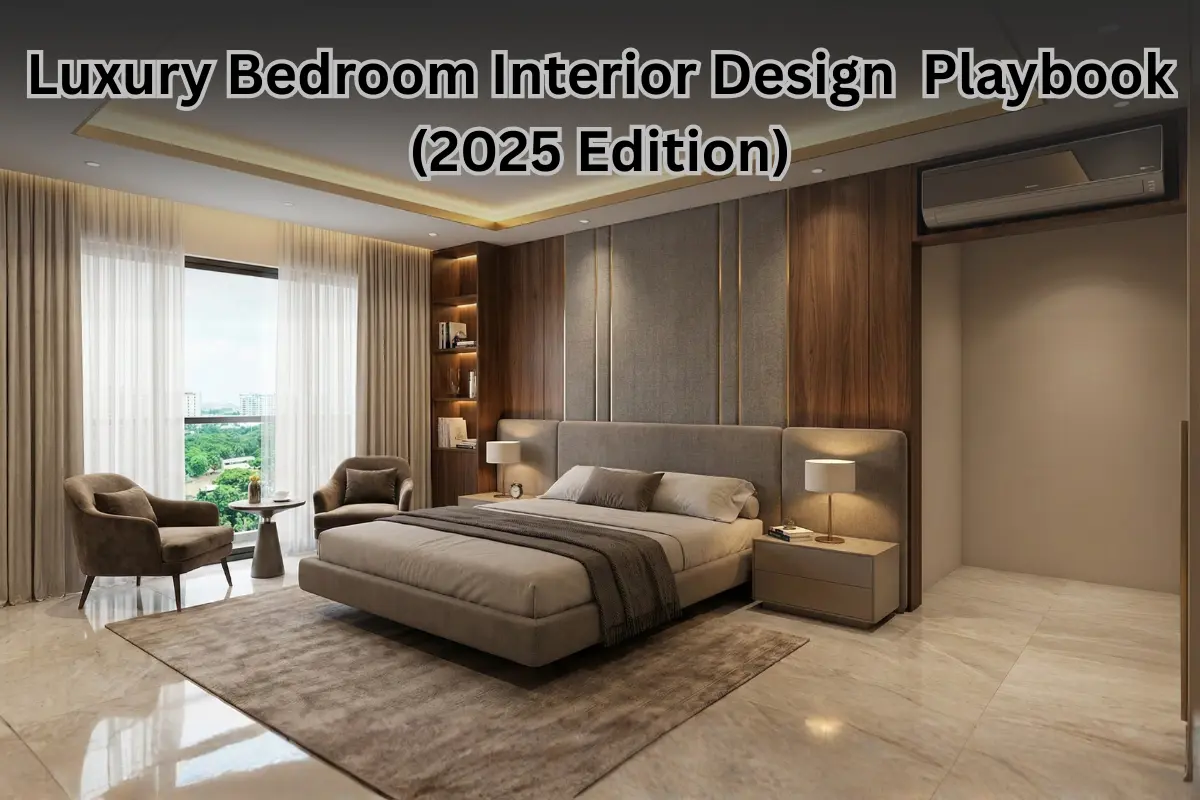
For small bedroom interior design, vertical volume is your best friend. Since floor space is limited, you must build upwards.
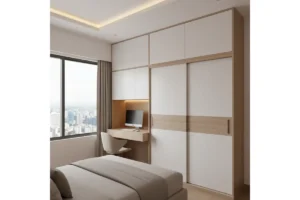
Compact bedroom design featuring a full-height sliding door wardrobe and a built-in floating study desk.

  1. Floor-to-Ceiling Wardrobes

Don’t stop at 7 feet. Build your storage right up to the 9.5-foot ceiling. Use the top “Loft” area for suitcases, winter kanthas, and seasonal items to keep your small room clutter-free.

  1. Sliding vs. Hinge Doors

If your room is under 110 sft, do not use hinge (palla) doors. They require a 2-foot swing radius. Use sliding channel doors instead—they require zero clearance.

  1. The Study Nook

Carve out a workspace by integrating a floating desk into your bedroom cabinetry. A 3-foot wide ledge is enough for a laptop and fits perfectly in small apartment designs.


The Kitchen Playbook: Modular Solutions for Tight Spaces

Modular kitchen design in Bangladesh is the ultimate solution for small kitchens (60–75 sft). Efficiency here is mathematical, and on smart storage solutions.
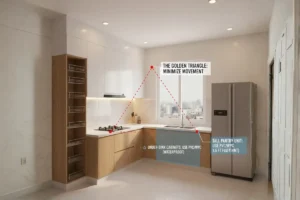
Diagram illustrating the golden work triangle layout between stove, sink, and refrigerator for an efficient small kitchen.

  • The Golden Triangle: Keep your Stove, Sink, and Fridge in a triangular layout to minimize movement.
  • The “Under-Sink” Risk: Dhaka’s plumbing often leaks. Never use Melamine board here. Use PVC Board or WPC—it is 100% waterproof and prevents rot.
  • Tall Units: If space permits, install a tall unit (pantry pull-out) to store monthly groceries in a narrow 1.5-foot footprint.


Optimizing the “Dead” Zones: Balcony & Foyer

In a 1,000 sft apartment, you cannot afford to waste the balcony or the entrance foyer. These are often treated as dumping grounds, but they hold massive potential for storage and relaxation. Dhaka apartments usually have small, narrow balconies (3ft x 8ft).
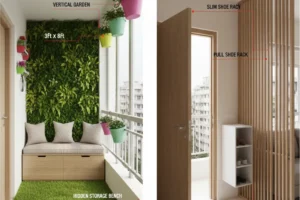
Small apartment balcony designed with vertical garden planters and a compact seating bench.

  • Vertical Gardens: Don’t put pots on the floor; they eat up legroom. Use wall-mounted vertical planters or railing-hung pots.
  • Hidden Storage: Build a low-height cabinet (18 inches high) on one side of the balcony. It doubles as a seating bench and storage for gardening tools or shoe cleaning kits.
  • Flooring: Use artificial turf (grass carpet) or WPC Decking tiles. They handle rain well and instantly make the concrete box feel like a garden.

The Foyer Strategy (Entrance)

Most small flats open directly into the living room. You need to create a “Landing Zone” without blocking the door.

  • The Shoe Cabinet: Use a sleek, pull-out shoe rack (tipping bucket style) that is only 10 inches deep. It hides 12–15 pairs of shoes without blocking the passage.
  • Visual Separation: Install a semi-transparent partition (wooden louvers or CNC jali) between the door and the living room sofa. This gives privacy to the guests sitting inside when the door opens.


Lighting Scenes: Creating Depth in Small Spaces

Lighting is the cheapest way to make a small room feel premium. In Dhaka, we often rely on a single harsh tube light, which flattens the room. You need a “Layered” approach.

Small apartment interior showcasing layered lighting with ceiling cove lights, a warm corner floor lamp, and accent wall lighting.

Layer 1: Ambient (The Base)

  • False Ceiling Cove: Use LED strips (Warm White 3000K or Natural White 4000K) inside the ceiling cove. This bounces light off the ceiling, making the roof feel higher.
  • Avoid Central Glare: Do not install heavy chandeliers in a small living room; they visually lower the ceiling.

Layer 2: Task (The Function)

  • Kitchen Under-Cabinet: Install profile lights under your overhead cabinets. This lights up your chopping board without casting your own shadow on the food.
  • Wardrobe Sensors: Use internal motion-sensor lights inside deep wardrobes. They turn on automatically when you open the door—luxury on a budget.

Layer 3: Accent (The Mood)

  • Warm Corners: Place a floor lamp or a corner hanging light with a warm bulb (2700K) in the living room corner. Turn this on in the evening for a cozy, relaxing vibe.


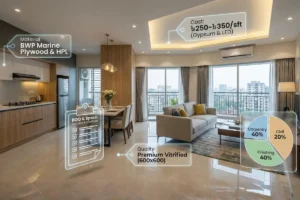
Material Guide: Where to Save vs. Where to Splurge

Not every inch of your house needs expensive materials. Smart budgeting means using the right material for the right zone.

Material Type

Best Use Case Cost Level Lifespan

Gorjon Ply + Lacquer

Main Door, Visible Living Room Furniture High 20+ Years
HPL / Marine Ply Kitchen Cabinets, Bathroom Vanities High

15+ Years (Waterproof)

MDF / Veneered Board

Bedroom Wardrobes, TV Units (Dry Areas) Medium

10–12 Years

Melamine Board Internal Shelves, Guest Room Cabinets Low

5–8 Years

Pro Tip: Investing in high-quality hardware (Hinges and Channels like Hettich or Hafele) is more important than expensive board materials. A cheap hinge will break in 1 year, ruining your expensive cabinet.

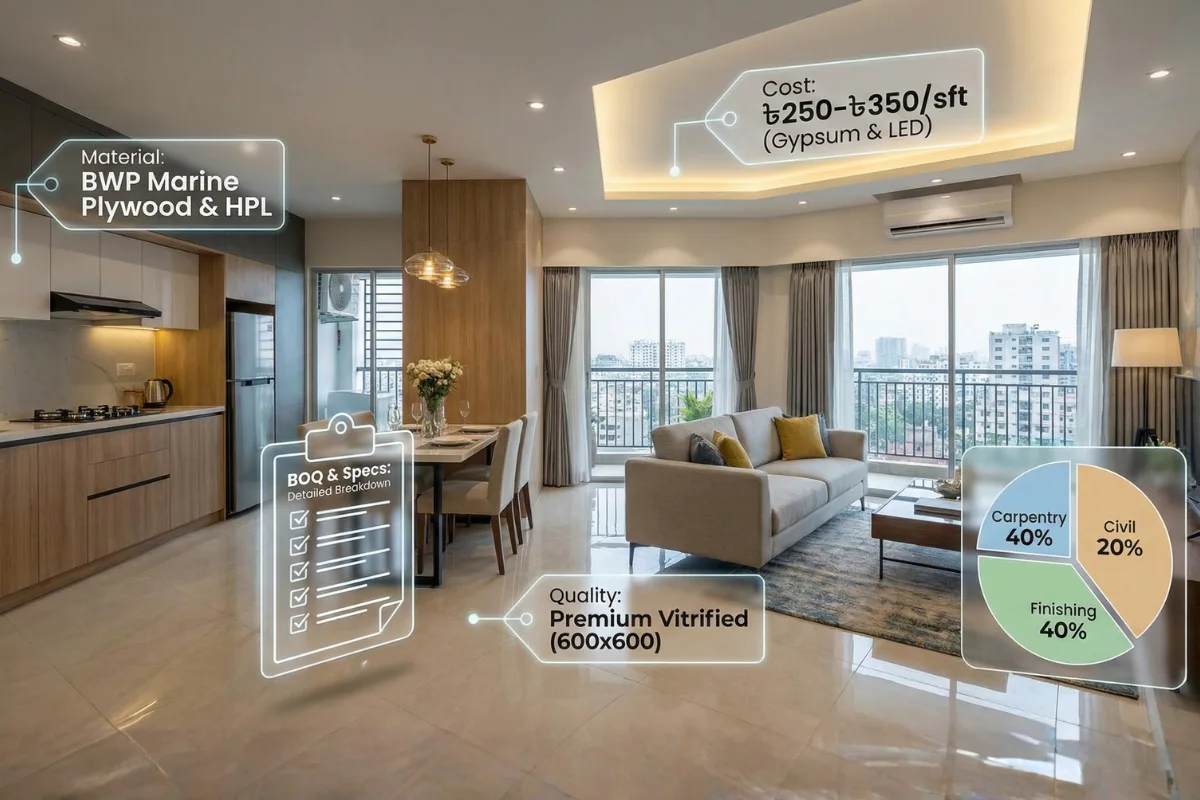
Interior Design Cost Analysis (2025 Estimates)

When planning your interior design in Dhaka, homeowners often ask, “How much does it cost?” The answer depends on your “Situation.”

Scenario A: The “Budget” Makeover (Rental/Temporary)

  • Focus: Paint, Lighting, Loose Furniture.
  • Cost: BDT 300 – 500 per sft.
  • What you get: Fresh wall paint, spot lights, readymade furniture layout.

Scenario B: The “Standard” Homeowner (New Flat)

  • Focus: Modular Kitchen, False Ceiling, Custom Wardrobes.
  • Cost: BDT 1,200 – 1,800 per sft.
  • What you get: Melamine/MDF cabinetry, 6mm glass finishes, basic false ceiling with cove lights.

Scenario C: The “Premium” Finish (Long-Term Home)

  • Focus: Lacquer Polish, Marble, Wall Paneling.
  • Cost: BDT 2,500 – 3,500+ per sft.
  • What you get: Solid wood or Veneered board with Lacquer finish, premium Hettich hardware, full-height wall paneling.

Hidden Costs You Must Budget For

When planning your interior design cost in Dhaka, homeowners often forget these “invisible” expenses:

  1. Electrical Rewiring: Builders provide standard points. Moving a switchboard or adding socket points for your new oven/AC will cost extra for cabling and labor.
  2. Civil Dismantling: If you want to break a wall or change floor tiles, debris removal (rubbish carting) in Dhaka city is strictly regulated and costs money.
  3. Service Charge/Gate Pass: Many apartment societies in Banani/Bashundhara charge a “Construction Fee” or require distinct gate passes for laborers. Check with your committee first.


Why Floor Planning is Critical

You cannot “figure it out as you go.” A 900–1,200 sft apartment requires a precise 2D layout and 3D visualization to ensure every inch is utilized.

At Oakwood Craft BD, based in Banani, we specialize in solving the puzzle of compact Dhaka apartments. We don’t just decorate; we engineer space to ensure your small home breathes.

See our completed small apartment projects to visualize these layouts in real life. Have a floor plan? Send it to us for a free layout critique.


Frequently Asked Questions

How much does it cost to design a small 1,000 sft apartment in Dhaka?

For a standard interior (Kitchen + 2 Bedrooms + Living), the cost typically ranges between BDT 10 Lakh to 15 Lakh.

Is false ceiling necessary for small flats?

Not always. If your ceiling height is low (<9.5 ft), avoid a full false ceiling. Use “Side Borders” or flat LED panels to keep the room feeling tall.

What is the best color for small apartment interiors?

Light colors like Off-White, Cream, or Pastels reflect light and make small spaces feel larger. Avoid dark walls in compact rooms.

Do you handle renovation for old flats?

Yes. Renovating an old flat often requires civil work (changing tiles/bathrooms). We handle the entire process from demolition to final paint.