You walk into your Dhaka apartment after a long day. The space feels cramped. Your wardrobe doors are warping from the humidity. Dark corners make the rooms feel smaller.
You know something needs to change. But where do you start?
Thousands of Dhaka homeowners face this paralysis. You search online and find vague price ranges. You call companies and get confusing quotes. You hear horror stories about projects going double over budget.
Stop guessing.
This is your definitive guide to Interior Design in Dhaka. We are cutting through the noise to give you exact BDT costs per square foot, the truth about materials that survive our climate, and a realistic timeline for your handover.
What Does “Interior Design” Actually Include?

In 2026, interior design in Bangladesh is no longer just about picking curtains or sofa colors. It is a full-service engineering and aesthetic solution.
When you hire a professional firm, you are paying for a Turnkey Solution:
- Space Planning: Optimizing layouts for compact 1,200 sqft apartments to maximize flow.
- MEP Planning: Mechanical, Electrical, and Plumbing engineering (crucial for safety in high-rises).
- Civil Work: Wall demolition, false ceilings, and chemical waterproofing.
- Joinery: Custom kitchen cabinets, wardrobes, and TV units manufactured to millimeter precision.
- 3D Visualization: Seeing the photorealistic result before a single brick is moved.
The Shift: The industry has moved from “Mistiri-managed” (unsupervised labor) to “Engineer-led” execution. This ensures quality control and adherence to BNBC (Bangladesh National Building Code) safety standards.
The Real Cost: Interior Design Price per Sqft in Dhaka
Let’s talk numbers. Pricing varies heavily based on material grades (BWP vs. Commercial) and finish quality.
Here is the 2026 Market Standard for a transparent budget:
|
Design Tier
|
Price Range (Per Sqft) |
What You Get
|
|
Entry-Level
|
BDT 900 – 1,500
|
Melamine board cabinets, local tiles, basic plastic paint, standard lighting. Functional but simple. |
|
Mid-Range
|
BDT 1,600 – 3,000
|
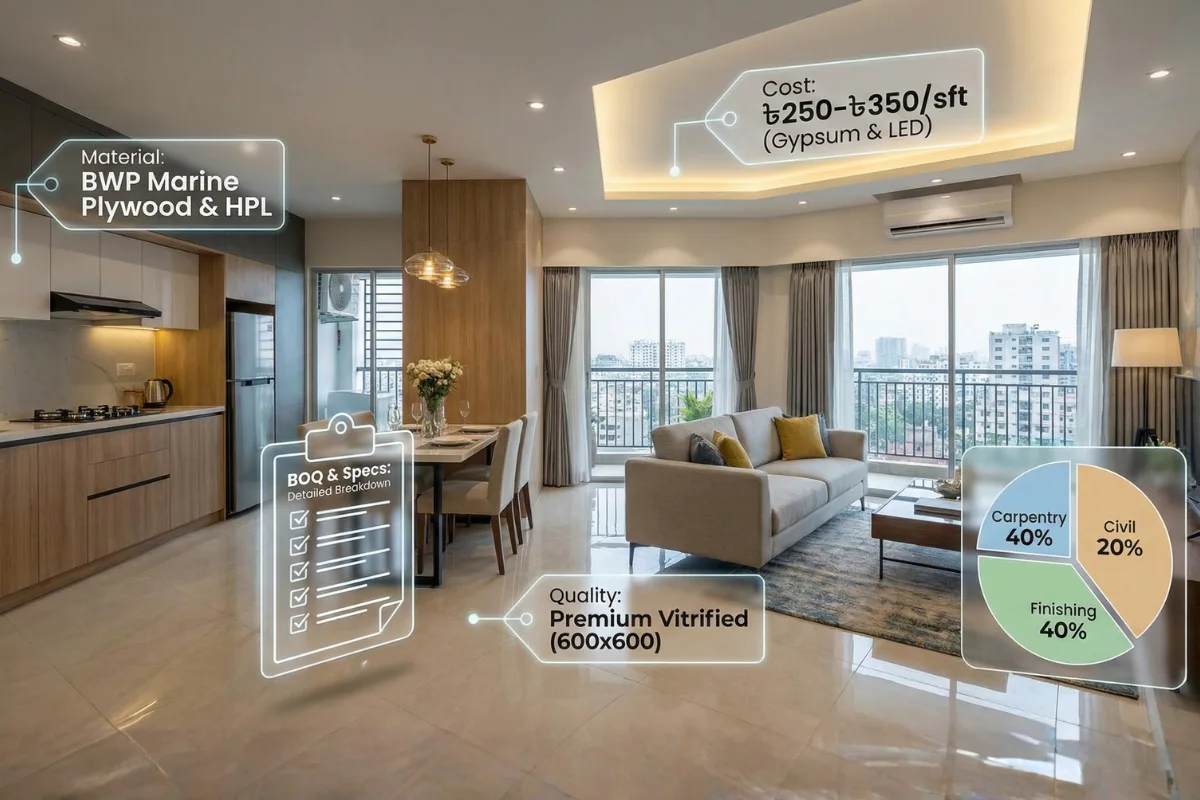
Marine Plywood (BWP), HPL finishes, vitrified tiles, false ceiling with spot lights, premium hardware (Hettich/Hafele). |
|
Premium/Luxury
|
BDT 3,500 – 6,000+
|
Imported marble, Italian lacquer polish, smart home automation, intricate veneer work, and extensive civil changes. |
The Math: For a standard 1,500 sqft apartment in Uttara or Dhanmondi:
- Basic Fix: ~ BDT 15 Lakhs
- Standard Luxury: ~ BDT 30–40 Lakhs
- High-End: ~ BDT 70 Lakhs+
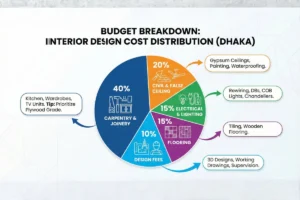
Budget Breakdown: Where Does the Money Go?

Understanding the cost distribution helps you prioritize where to spend and where to save.
- Carpentry & Joinery (40%): The biggest expense. This covers your Kitchen, Wardrobes, and TV Units, and other custom furniture. Tip: Never compromise on the plywood grade here.
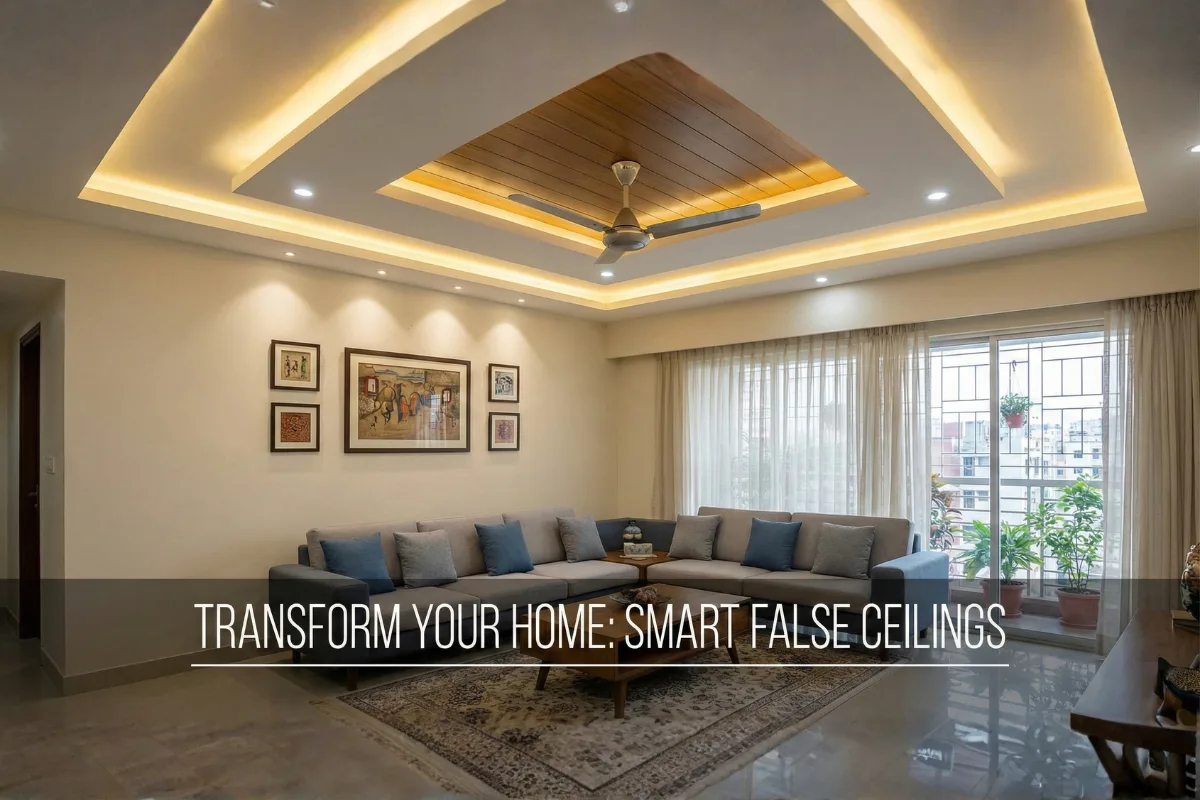
- Civil & False Ceiling (20%): Gypsum board ceilings, wall painting, and bathroom waterproofing.
- Electrical & Lighting (15%): Rewiring (essential for old apartments), distribution boards, COB lights, and chandeliers.
- Flooring (15%): Tiling or Wooden flooring.
- Design Fees (10%): The cost for 3D designs, working drawings, and project supervision.
Material Wars: What Survives Bangladesh’s Climate?
Dhaka is humid. Coastal areas are saline. If you choose the wrong material, your interior will rot in 3 years.
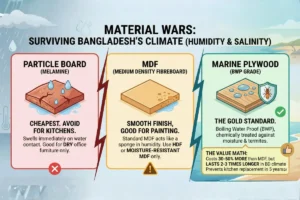
1. Plywood vs. MDF vs. Particle Board
- Particle Board (Melamine): Cheapest. Avoid for kitchens. It swells immediately if water touches it. Good for dry office furniture only.
- MDF (Medium Density Fibreboard): Smooth finish, good for painting. However, standard MDF acts like a sponge in Dhaka’s humidity. Use HDF (High Density) or Moisture-Resistant MDF only.
- Marine Plywood (BWP Grade): The Gold Standard. Boiling Water Proof (BWP) plywood is chemically treated to resist moisture and termites.
- The Value Math: Marine ply costs 30-50% more than MDF, but it lasts 2-3 times longer in Bangladesh’s humid climate. It is an investment that prevents you from replacing your kitchen in 5 years.
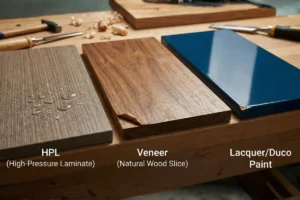
2. Surface Finishes: Laminate vs. Veneer
- HPL (High-Pressure Laminate): Also known as “Sunmica.” It is scratch-resistant, waterproof, and comes in thousands of patterns. Perfect for high-traffic areas.
- Veneer (Natural Wood Slice): Looks like real wood because it is wood. It feels premium but requires polishing and maintenance. It can peel in extreme humidity if not sealed correctly.
- Lacquer/Duco Paint: High-gloss, seamless automotive-style finish. Looks expensive but chips easily.
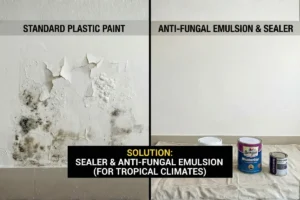
3. Paint: The Anti-Fungal Necessity
Standard plastic paint often peels due to “damp” in walls.
- The Solution: Use Sealer and Anti-Fungal Emulsions (like Berger WeatherCoat or Asian Paints Damp Proof) specifically designed for our tropical monsoon climate.
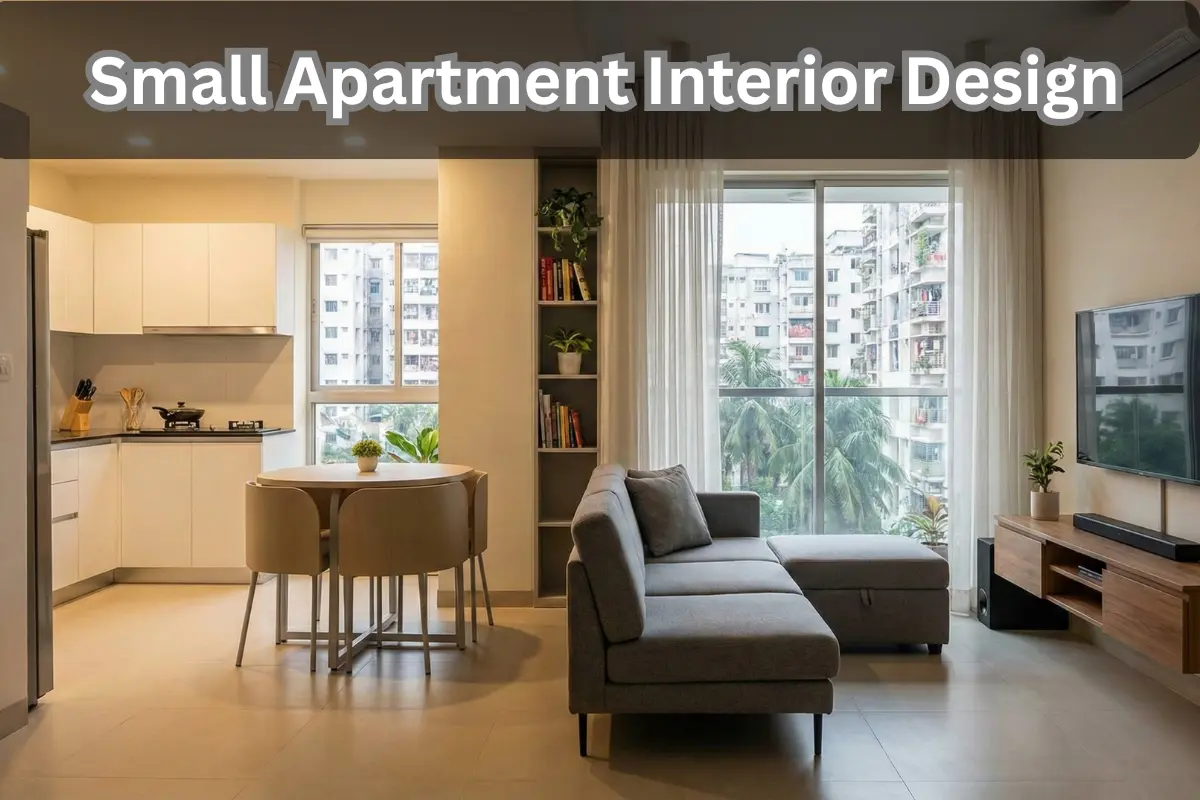
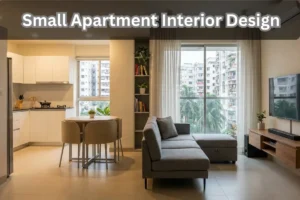
Design Strategy: Maximizing Compact Dhaka Apartments
Beyond materials, how you plan the space defines your comfort. Professional designers use these strategies to make small apartments feel huge.
1. The 30% Rule (Avoid Overcrowding)
Dhaka apartments are shrinking. A common mistake is filling every corner with furniture.
- The Strategy: Leave 30-40% of floor space open. This “negative space” makes the room breathe.
- The Fix: Use multi-functional furniture (like beds with hydraulic storage or wall-mounted desks) instead of heavy standalone pieces.
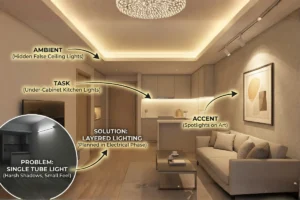
2. Lighting Layers
A single tube light creates harsh shadows and makes rooms look small.
- The Strategy: Plan for Ambient (hidden false ceiling lights), Task (under-cabinet kitchen lights), and Accent (spotlights on art) lighting. This must be planned during the electrical phase; you cannot easily add points later.
3. Future-Proofing the Look
- The Strategy: Avoid trendy, loud patterns on expensive fixed furniture (like wardrobes). Use neutral bases (Whites, Greys, Wood tones). Add trends and color through easily changeable soft furnishings like curtains, cushions, and rugs.
Room-by-Room Guide: What to Expect
The Kitchen (The Budget Eater)
- Cost: BDT 3.5 Lakh – 8 Lakh+
- Critical Specs: Use BWP Plywood for the carcass (body). Use Quartz or Granite for the countertop (avoid porous marble that stains with turmeric). Use Hettich/Hafele soft-close hinges. learn more about smart kitchen storage solutions.
The Master Bedroom
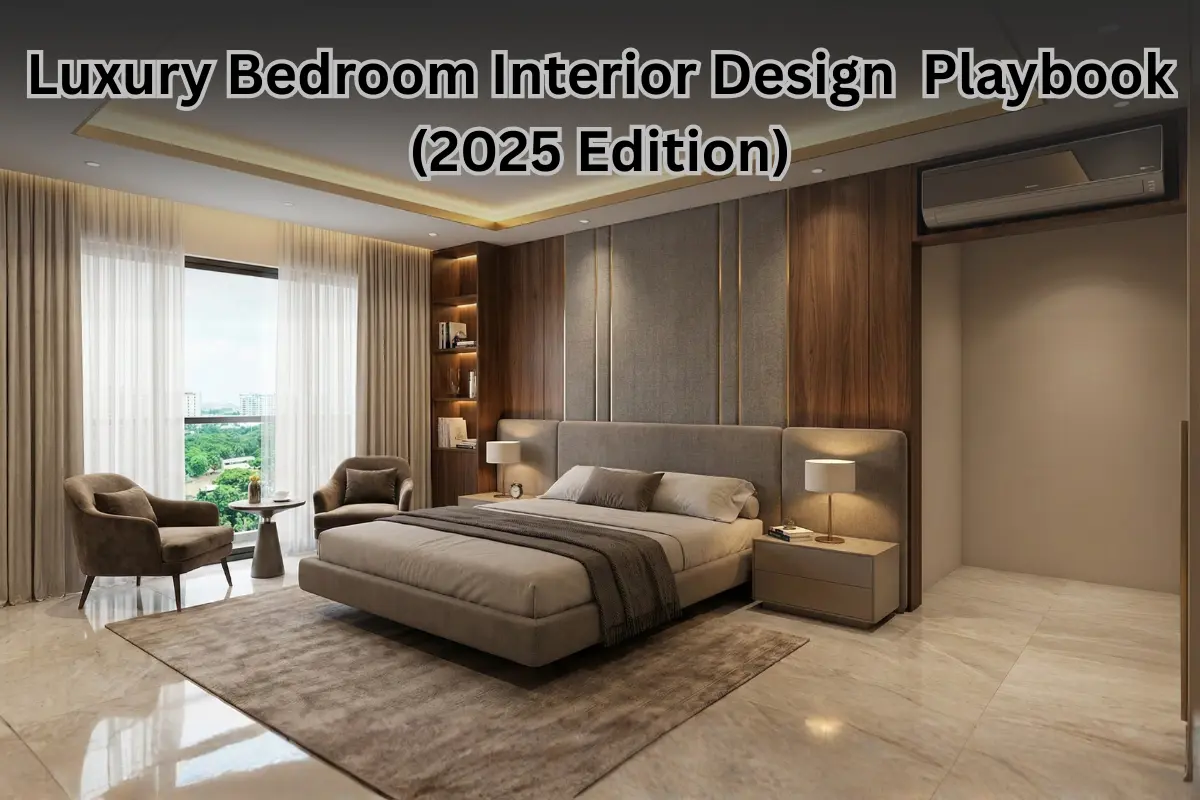
- Cost: BDT 2.5 Lakh – 5 Lakh
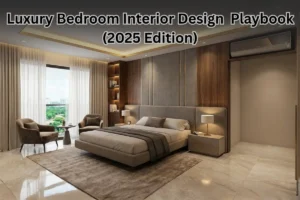
- Focus: Floor-to-ceiling wardrobes to maximize vertical storage. Use sliding doors to save space in compact rooms. Add a dressing unit with hidden storage behind the mirror.
The Living Room
- Cost: BDT 3 Lakh – 10 Lakh+
- Trends: TV Wall paneling with hidden cable management. Louvers (fluted panels) are trending in 2026.
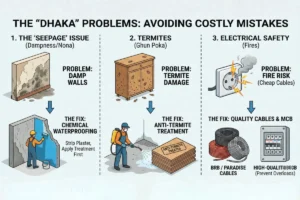
The “Dhaka” Problems: Avoiding Costly Mistakes
Here are the specific issues Bangladeshi homeowners face that foreign guides won’t tell you about.
- The “Seepage” Issue
Before installing expensive cabinets, check your walls for dampness (nona).
- The Fix: Do not just paint over it. You must strip the plaster and apply a chemical waterproofing treatment first.
- Termites (Ghun Poka)
Dhaka soil is prone to termites.
- The Fix: Ensure all plywood is Anti-Termite treated. Spray the raw concrete floors with anti-termite chemicals before installing wooden flooring.
- Electrical Safety
Electrical fires are a major risk in high-rises.
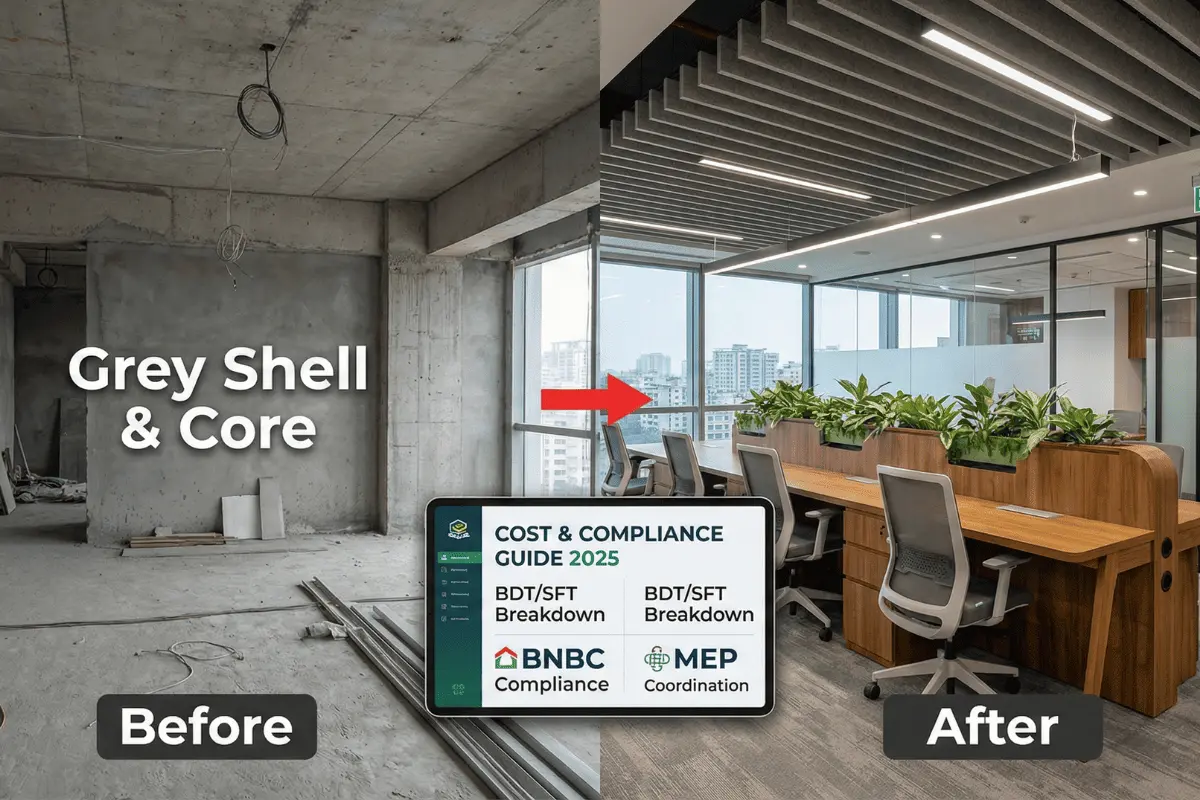
- The Fix: Do not use cheap cables. Insist on BRB or Paradise cables. Ensure your Distribution Board (DB) has a high-quality Circuit Breaker (MCB) to prevent overloads.For detailed safety standards, check our cost and compliance guide.
How Long Will It Take? (Realistic Timelines)
Rushing a project ruins the finish. Here is a realistic Gantt chart for a 1,500 sqft home:
- Design Phase (3-4 Weeks): Layouts, 3D Renders, Material Selection.
- Civil Work (2 Weeks): Demolition, Wiring, False Ceiling framing.
- Carpentry (4-6 Weeks): This is the longest phase. Fabrication of cabinets.
- Finishing (3 Weeks): Painting, Polishing, Electrical fitting.
- Handover (1 Week): Deep cleaning and “Snag List” fixing.
Total Time: 3.5 to 5 Months.
Understanding Your Quotation (BOQ)
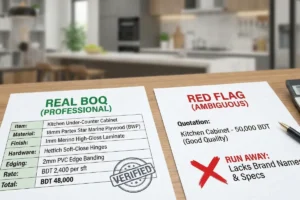
A professional interior firm provides a Bill of Quantities (BOQ). It should not just say “Kitchen Cabinet – 50,000 BDT.”
A Real BOQ looks like this:
- Item: Kitchen Under-Counter Cabinet.
- Material: 18mm Partex Star Marine Plywood (BWP).
- Finish: 1mm Merino High-Gloss Laminate.
- Hardware: Hettich Soft-Close Hinges.
- Edging: 2mm PVC Edge Banding.
- Rate: BDT 2,400 per sft.
Red Flag: If a quote lacks brand names and thickness specs, run away. They will use cheap materials.
Your Next Steps
Interior design is an investment in your daily happiness and your property value.
Don’t start blindly.
- Measure your carpet area.
- Decide your budget tier (Entry vs. Premium).
- Demand a detailed BOQ with brand specifications.
Armed with this guide, you can now contact us to interview designers with confidence, ask the hard questions about BWP plywood and damp proofing, and build the home interior you deserve.
Frequently Asked Questions
How much does interior design cost in Dhaka per sqft?
For a quality mid-range finish, expect to pay between BDT 1,600 to 3,000 per sqft. This includes marine plywood woodwork, false ceilings, and premium paint.
Which plywood is best for kitchens in Bangladesh?
You must use BWP (Boiling Water Proof) grade plywood, often called “Marine Ply.” Brands like Partex, Akij, and Super Board offer verified marine grades. Avoid MDF in the kitchen.
What is the difference between carpet area and build area?
Interior quotes should be based on Carpet Area (the actual usable floor space inside the walls), not the Build Area (which includes walls and common spaces). Always clarify this measurement.
Do I need permission for interior design in Dhaka?
For internal furniture and decoration, no. However, if you are breaking walls or changing the structural layout, you may need to consult the building’s association or verify structural safety under BNBC guidelines.
How do I check the quality of work?
Check the edges. Good carpentry has smooth Edge Banding (no rough wood visible). Check the alignment; drawers should close softly and evenly. Check the paint; there should be no undulations (waves) on the wall under light.

One Response