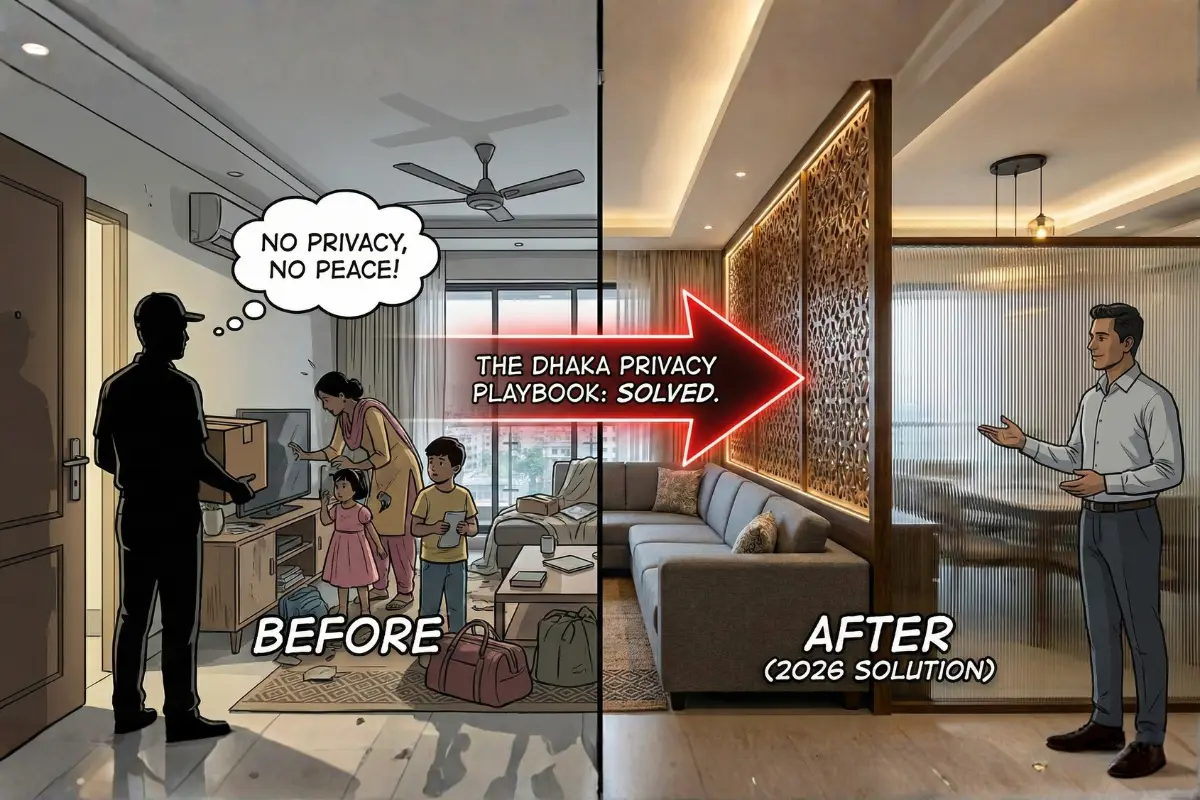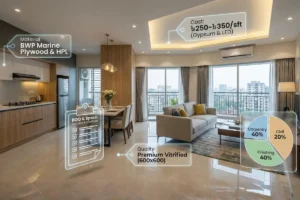
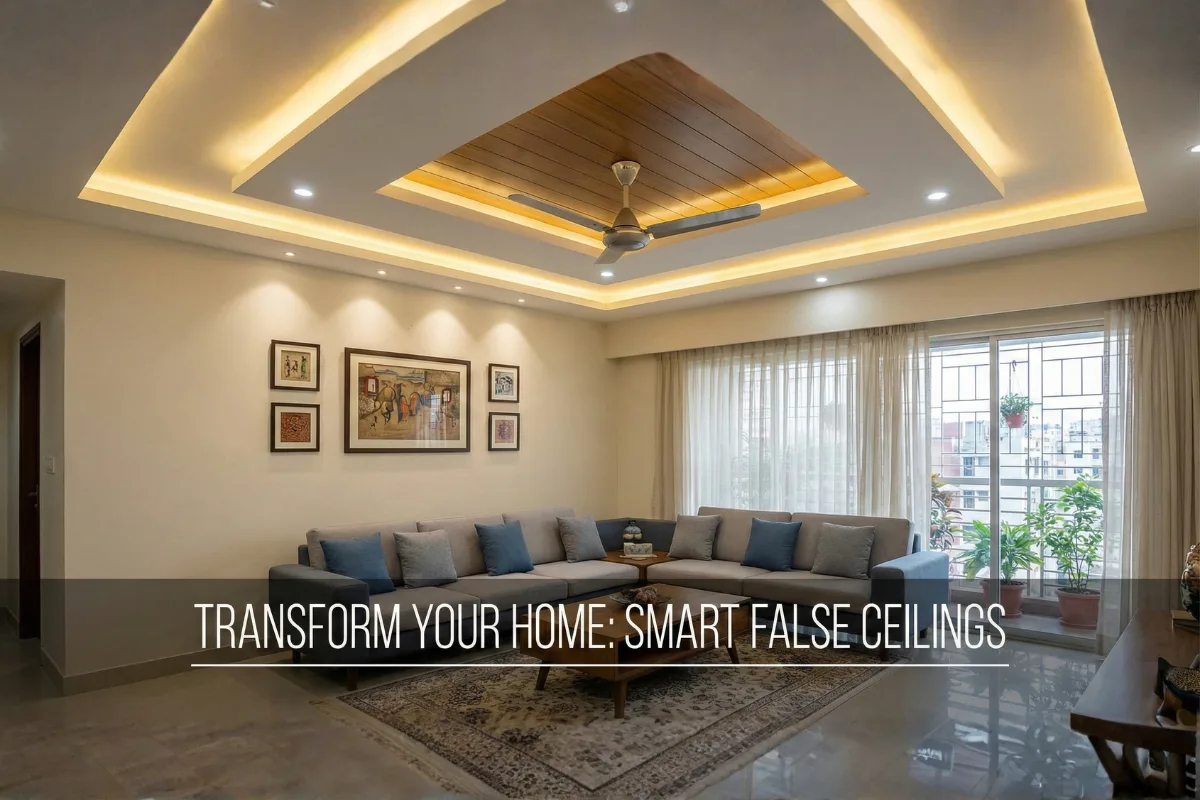
Your apartment feels like an oven by noon. The AC barely keeps up, forcing you to run it at 18°C just to feel comfortable. Exposed wires, rough concrete patches, and clashing pipes ruin the visual harmony of your furniture. If you live in Dhaka, you are not alone in this struggle. Thousands of homeowners in neighborhoods like Mirpur, Dhanmondi, and Bashundhara face these same three enemies: sweltering heat, visual clutter, and noise pollution.

The solution is not just another AC unit, but a smart ceiling interior design.

Also known technically as “dropped” or “suspended” ceilings, a well-executed false ceiling is a functional necessity for the Bangladeshi climate. Suspended 4–9 inches below your actual concrete slab, these systems act as a thermal shield, cutting indoor temperatures by up to 5°C. They provide the infrastructure to hide messy utilities and transform a basic flat into a luxury residence with ambient, shadowless lighting.

Market Insight 2026: In Dhaka, basic false ceiling price starts at just ৳120 per square foot (installed). Premium designs featuring wood accents or CNC-cut jaali can reach ৳800 per square foot. This investment typically boosts property resale value by 10-15% while slashing monthly cooling costs by roughly 30%.

Why False Ceilings Matter in Dhaka’s Climate: The Thermal Science

To understand why false ceilings are essential, you must first understand the thermal dynamics of a typical Dhaka building. The city’s “concrete jungle” creates brutal living conditions during the summer months (March–October).

The “Heat Sink” Effect

Most residential buildings in Bangladesh use RCC (Reinforced Concrete Cement) roof slabs. Concrete has high thermal mass, meaning it absorbs scorching sunlight all day long. By 3 PM, your roof slab can reach temperatures of 55°C–60°C. The problem is that concrete holds this heat and releases it slowly downward into your living space long after sunset. This is why your bedroom often feels hotter at 10 PM than it did at noon.

The Thermal Shield Solution

A professionally installed false ceiling interior design creates a 6-inch static air gap between your living space and the hot concrete slab above. Air is a poor conductor of heat. This trapped air layer acts as a powerful natural insulator, preventing the radiant heat from the roof from penetrating your room.

  • Immediate Impact: Without AC, room temperatures drop 2-3°C immediately after installation.
  • Enhanced Cooling: If you add a layer of reflective foil backing (thermal insulation sheets) above the gypsum board, you can achieve up to 5°C reductions.
  • Energy Efficiency: For a typical 1,200 sq. ft. apartment, this reduced heat load means your AC compressor cycles off more frequently. This saves ৳2,000–5,000 yearly on electricity bills. Your ceiling essentially pays for itself within 3–4 years through energy savings alone.

Combating Noise Pollution

Dhaka is one of the noisiest cities in the world. Residents in high-density areas deal with constant traffic honking, construction clamor, and the noise of upstairs neighbors.

Interior ceiling decoration using acoustic-grade gypsum boards or specialized fiber panels absorbs sound waves rather than reflecting them. This can cut airborne noise transmission by 30–50%. For remote workers, this acoustic damping turns a chaotic apartment into a quiet, productive sanctuary where video calls are possible without background interference.

Gypsum vs. PVC vs. Wood: The Ultimate Material Guide

Material selection makes or breaks your project. Dhaka’s unique climate characterized by 80% humidity, heavy monsoon rains, and occasional electrical faults, demands smart choices. You cannot simply copy a design from a European magazine; you must choose materials that survive Bangladesh.
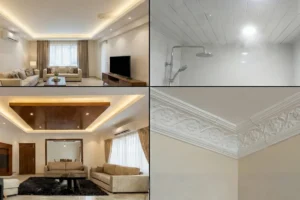
gupsum vd pvc vs wood in ceiling interior design

1. Gypsum Ceiling Design (The Residential Standard)

Gypsum board is the undisputed king of living rooms and bedrooms in Bangladesh. It is a calcium sulfate-based mineral that is crushed and pressed between two sheets of heavy paper.

  • Why it works: It provides a seamless, smooth finish that looks exactly like a concrete wall. It is perfect for simple ceiling interior design because joints can be filled and painted over, making them invisible.
  • Fire Safety: Quality gypsum is naturally fire-resistant. It contains chemically combined water that turns to steam when exposed to fire, slowing down flame spread for up to 1 hour.
  • The Risk: Gypsum hates water. It acts like a sponge. If your roof slab has even a minor leak or if you live on the top floor with poor weatherproofing, moisture will seep through. This leads to brown mold stains and eventual crumbling.

2. PVC Ceiling Panels (The Waterproof Warrior)

PVC (Polyvinyl Chloride) panels flip the script for damp areas. These are lightweight, plastic panels that interlock using a tongue-and-groove system, requiring no paint or polish.

  • Best Use: Essential for bathrooms, kitchens, and balconies.
  • Durability: Termites ignore them completely. Monsoon humidity and even direct flood water cannot damage them.
  • Aesthetics: The downside is the look. PVC often looks “plasticky” up close. While wood-grain finishes exist, they rarely fool the eye in direct sunlight. However, for a high-humidity zone like a bathroom, durability trumps aesthetics.

3. Wood & Veneer (The Luxury Statement)

For a drawing room ceiling interior design that screams luxury, nothing beats real wood.

  • Options: You can use solid wood battens (Teak/Segun) or, more commonly, MDF boards finished with a high-quality wood veneer.
  • Application: Wood is rarely used for the entire ceiling due to cost and weight. Instead, it is used as an accent feature, a wooden raft floating in the center of a white gypsum ceiling, or wooden louvers running along one side.
  • Maintenance: Wood requires PU lacquer coating to seal it against moisture and must be treated for termites annually.

4. Plaster of Paris (POP) (The Budget Wildcard)

POP allows artisans to mold elaborate cornices and floral patterns by hand. It is cheaper than board systems (৳150–250 per sq. ft.).

  • The Problem: Durability is a major issue in Dhaka. POP is brittle. Due to the slight vibrations of buildings (from traffic or construction nearby) and thermal expansion, hairline cracks often appear within 3–5 years. It is best reserved for small decorative centerpieces, not entire ceilings.

False Ceiling Price in Bangladesh Per Sq Ft (2026 Breakdown)

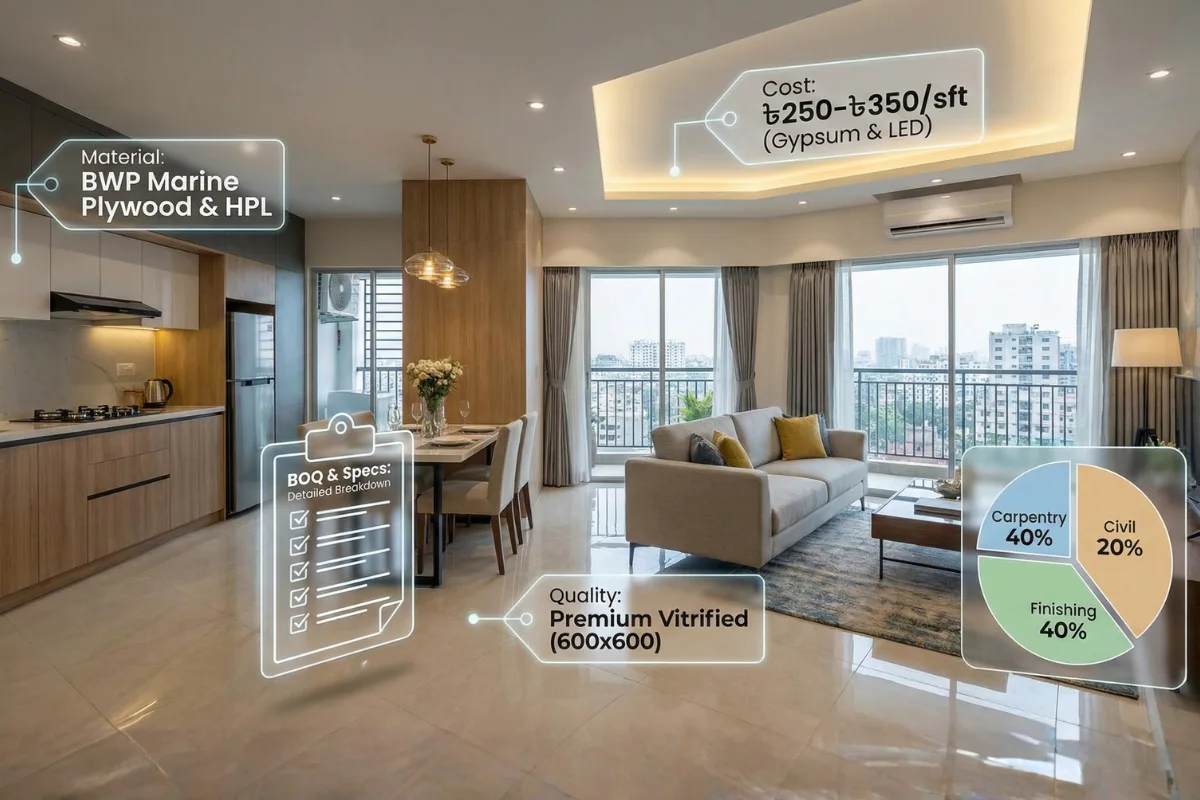
One of the most searched questions is about cost. Be careful, some vendors quote material-only prices (e.g., ৳85/sq ft) while hiding the labor, framing, and finishing costs. Below is the realistic installed price you should expect in Dhaka for a turnkey project.

Ceiling Type Best For Lifespan Estimated Cost (Installed)
Basic Gypsum (Flat) Rental flats, spare rooms 10-12 Years ৳120 – ৳180 / sq ft
Standard Design (Cove) Living rooms, Dining 12-15 Years ৳200 – ৳350 / sq ft
PVC / Partex Bathrooms, Kitchens 10+ Years ৳150 – ৳250 / sq ft
Premium Wood/Veneer Drawing rooms, Duplexes 15+ Years ৳450 – ৳800+ / sq ft
Metal/Grid Ceiling Offices, Commercial 20+ Years ৳250 – ৳400 / sq ft


Expert Tip: Always request ISI-certified gypsum boards (brands like Saint-Gobain or similar reputed Asian standards). Local knockoffs use low-grade plaster that crumbles within two years. The ৳20/sq ft savings today becomes a ৳30,000 replacement cost tomorrow.

Hidden Costs to Watch

When budgeting, do not forget these often-overlooked expenses:

  • Electrical Wiring: The ceiling contractor builds the ceiling, but the electrician runs the wires. Budget ৳500–1,000 per point.
  • Paint Finish: Gypsum needs a primer coat plus two coats of plastic paint. This typically adds ৳15–25/sq ft.
  • Surge Protection: Dhaka’s power grid fluctuates. Installing a robust driver or surge protector for your LED strips prevents them from burning out during voltage spikes.

Smart Designs for Low-Height Apartments

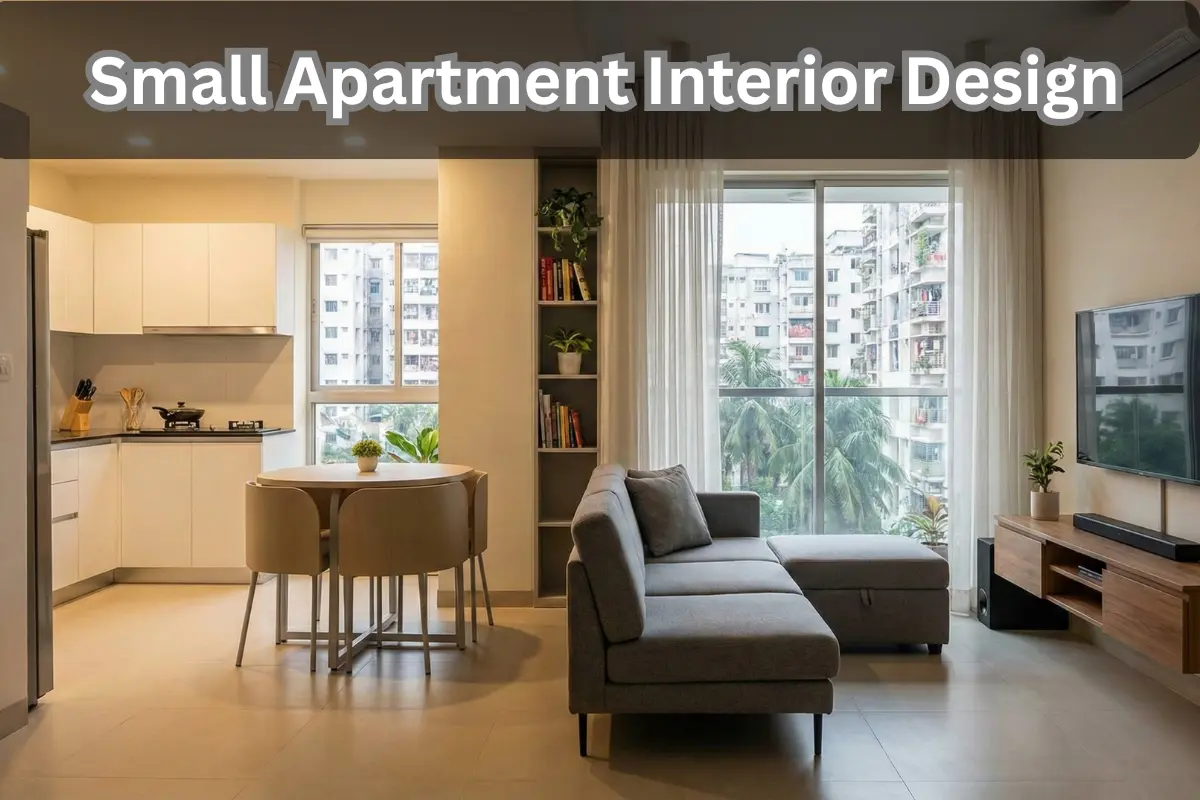
Standard Dhaka apartments built after 2010 often measure just 9.5 feet from floor to ceiling. If you drop a false ceiling 8 inches across the whole room, your home can feel like a cave. Through our work in compact flats in Uttara and Bashundhara, we have perfected the Peripheral Design strategy.
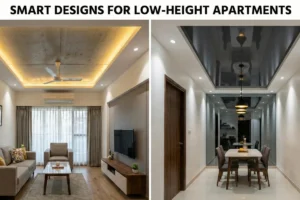
smart ceiling designs for low height apartments

The “Floating” Perimeter

Instead of covering the entire ceiling, we install framing only along the wall edges (peripheral), leaving the central concrete slab exposed.

  • The Trick: Deep cove lighting runs around the inner edge of this perimeter, casting light upward onto the exposed concrete center.
  • The Result: You drop 4-6 inches at the edges to hide AC pipes and hold spotlights, but the center of the room stays at full height. Air circulation improves, and the ceiling fan remains at a safe height.
  • Psychological Height: The light bouncing off the central slab makes the ceiling feel higher than it actually is.
  • Cost Benefit: You cover only 40% of the ceiling area, dropping material costs by half. A 200 sq. ft. bedroom costs ৳8,000–12,000 instead of ৳20,000+.

The Mirror Illusion

For compact dining areas or corridors with no windows, use high-gloss stretch PVC films or mirror panels.

  • Cost: Approx ৳300/sq ft.
  • Effect: When framed with matte gypsum borders, these glossy surfaces create infinite depth. It creates an optical illusion where the ceiling seems to disappear, psychologically adding 1–2 feet of perceived height.

Room-by-Room Guide: Tailoring the Design

Every room has a different function, and your interior ceiling decoration should reflect that.

Drawing Room Ceiling Interior Design

This is your showpiece, the “Stage” of the home.
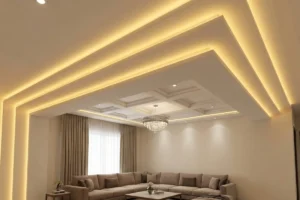
tailored drawing room ceiling interior design

  • Design Strategy: Use coffered ceilings (sunken panels) or bold geometric shapes to define the seating area.
  • Feature: If you have a large structural beam cutting through the room, use a “Step Cascade” design. Build graduated gypsum layers that “step down” the side of the beam, and embed LED strips in each step. This turns an ugly concrete beam into a glowing architectural feature.
  • Lighting: Use a central chandelier or a fan with integrated lights as the focal point.

Dining Room Ceiling Interior Design

The dining area is about focus and warmth.
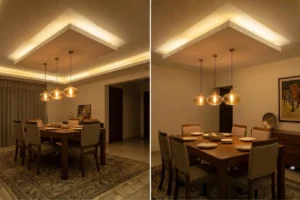
dining room ceiling interior design

  • Design Strategy: Create a defined “island” or “raft” ceiling directly above the dining table. This visual mirror effect grounds the table in the room.
  • Lighting: Drop pendant lights from the center of the raft. They should hang about 30 inches above the table surface to create an intimate dining atmosphere without blocking eye contact.

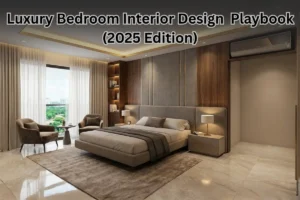
Bedroom Ceiling Interior Design

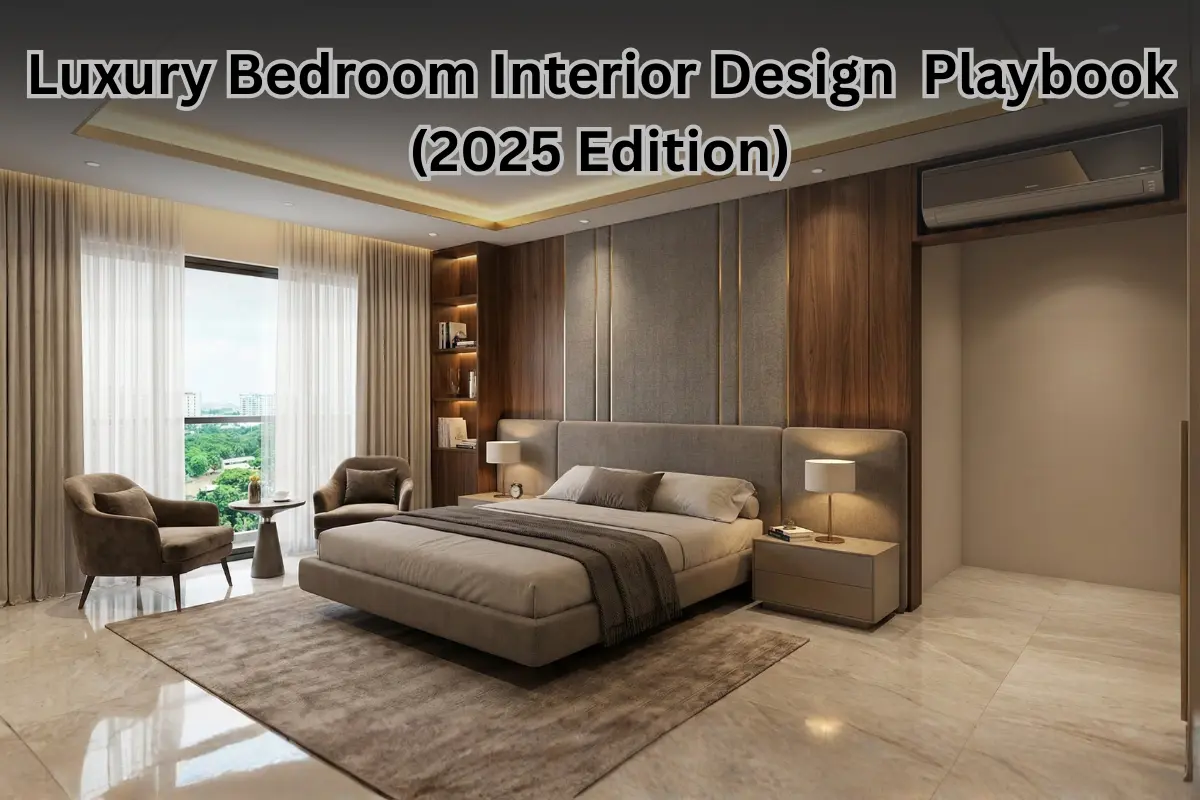
The bedroom interior design is for rest. The ceiling should be calm, not chaotic.
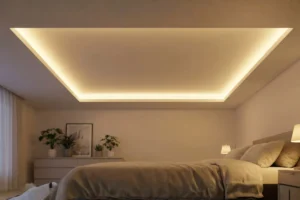
bedroom ceiling interior design

  • Design Strategy: Focus on “Tray” ceilings, a simple recessed center with a glowing perimeter. Avoid heavy patterns, mirrors, or sharp geometric points directly above the bed, as these can feel subconsciously threatening (“Sha Qi” in Feng Shui principles).
  • Lighting: Use strictly 3000K warm white cove lighting. This mimics the color of sunset, signaling your brain to produce melatonin for sleep.

Office Ceiling Interior Design

For home offices or commercial spaces, functionality rules.
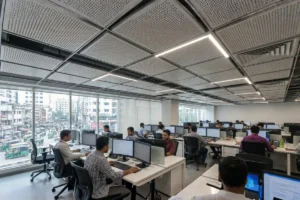
office ceiling interior design

  • Design Strategy: Use Metal Grid Ceilings or perforated gypsum for maximum acoustic absorption. In an office, reducing echo is more important than aesthetics.
  • Lighting: Use 4000K Neutral White profile lights. This crisp, bright light improves concentration and reduces eye strain during long hours of computer work.

Modern Lighting Integration: The 2026 Aesthetic

Harsh, singletube lights died in 2024. The 2026 aesthetic is about layered, shadowless illumination. We believe light should come from “everywhere and nowhere.”

  • Cove Lighting (Ambient): Hidden LED strips in perimeter channels bounce light off the ceiling. This provides a soft, ambient glow that reduces shadows and softens the room.
  • Spotlights (Accent): Recessed 3–5 watt COB (Chip on Board) lights. These are used to direct focus, aim them at artwork, texture walls, or curtains to create visual hierarchy.
  • Profile Lights (Task): Linear LED bars embedded flush into the gypsum. These provide sleek, modern ceiling interior design looks and high-intensity light for reading or working.
  • Fan Integration: Never place a fan directly below a light source, as it creates a strobing “helicopter effect.” Always position spotlights at least 2 feet away from the fan blades.

Pro Tip: Automation is the future. Install Wi-Fi-enabled smart drivers for your cove lights. This allows you to dim the lights or change the color temperature from your phone, cool white for working, warm yellow for relaxing.

Maintenance for 10+ Year Durability

A false ceiling is a long-term investment. Proper care extends its life dramatically.

  • Dusting: Use a long-handled microfiber duster to clean the cove channels monthly. Dust accumulation creates dark lines that ruin the lighting effect.
  • Monsoon Inspection: Inspect the joints along the wall edges annually, especially before the monsoon season. If you see a hairline crack or gap, seal it immediately with acrylic caulk. Resealing costs ৳2,000 but prevents ৳50,000 in water damage later.
  • Humidity Control: Run exhaust fans in kitchens and bathrooms for at least 20 minutes after use. Keeping indoor humidity below 60% prevents mold growth on gypsum surfaces.
  • LED Replacement: LED strips typically last 20,000 hours (roughly 5-7 years). Design your ceiling with accessible “trap doors” or easy-access channels so that replacing a driver or strip doesn’t require breaking the gypsum board.

Ready to Transform Your Dhaka Home?

Whether you need a simple ceiling design for low-height rooms or a premium wood-accented masterpiece for a duplex, strategic installation delivers benefits for decades. A false ceiling is the single most impactful upgrade you can make to your home’s comfort and value.

At Oakwood Craft BD, our factory-to-finish approach ensures millimeter-precision custom fits. We don’t just cut boards; we engineer comfort. From calculating the exact thermal load to crafting custom wood veneers in our facility, every step is managed to ensure your ceiling looks perfect and performs flawlessly.

GET A FREE CEILING DESIGN CONSULTATION


Frequently Asked Questions (FAQ)

What is the false ceiling price in Bangladesh per sq ft?

Prices range from ৳120–180/sq ft for basic gypsum flat ceilings to ৳450–800/sq ft for premium designs with wood accents or complex layering. Always confirm if the quote includes electrical wiring and paint, as these are often charged separately.

Which is better: Gypsum or Partex ceiling?

Gypsum is superior for living rooms due to its fire resistance, thermal insulation, and seamless finish. Partex (Particle Board) is cheaper but highly susceptible to termite attacks and water damage, making it a poor choice for long-term residential use in Dhaka.

Does a false ceiling reduce room height?

Yes, typically by 4–9 inches to accommodate the frame and AC ducts. However, using a peripheral design (framing only the edges) keeps the center of the room at full height, maintaining a spacious feel while still hiding utilities.

How to hide a beam in the middle of the living room?

Use the Step Cascade Method: build graduated gypsum layers that “step down” from the ceiling to the bottom of the beam. Embed LED strips in the steps to turn the structural eyesore into a glowing, intentional design feature.

What is the best ceiling light for a living room in Bangladesh?

A combination of Warm White (3000K) Cove Lighting for ambiance and recessed Spotlights for task lighting works best. Avoid single central fixtures as they create harsh shadows and make the room feel smaller.

Can I install a false ceiling in a damp room?

Yes, but you must choose the right material. Use PVC panels or Calcium Silicate boards for damp rooms like bathrooms and balconies. Do not use standard gypsum, as it will absorb moisture and develop mold.